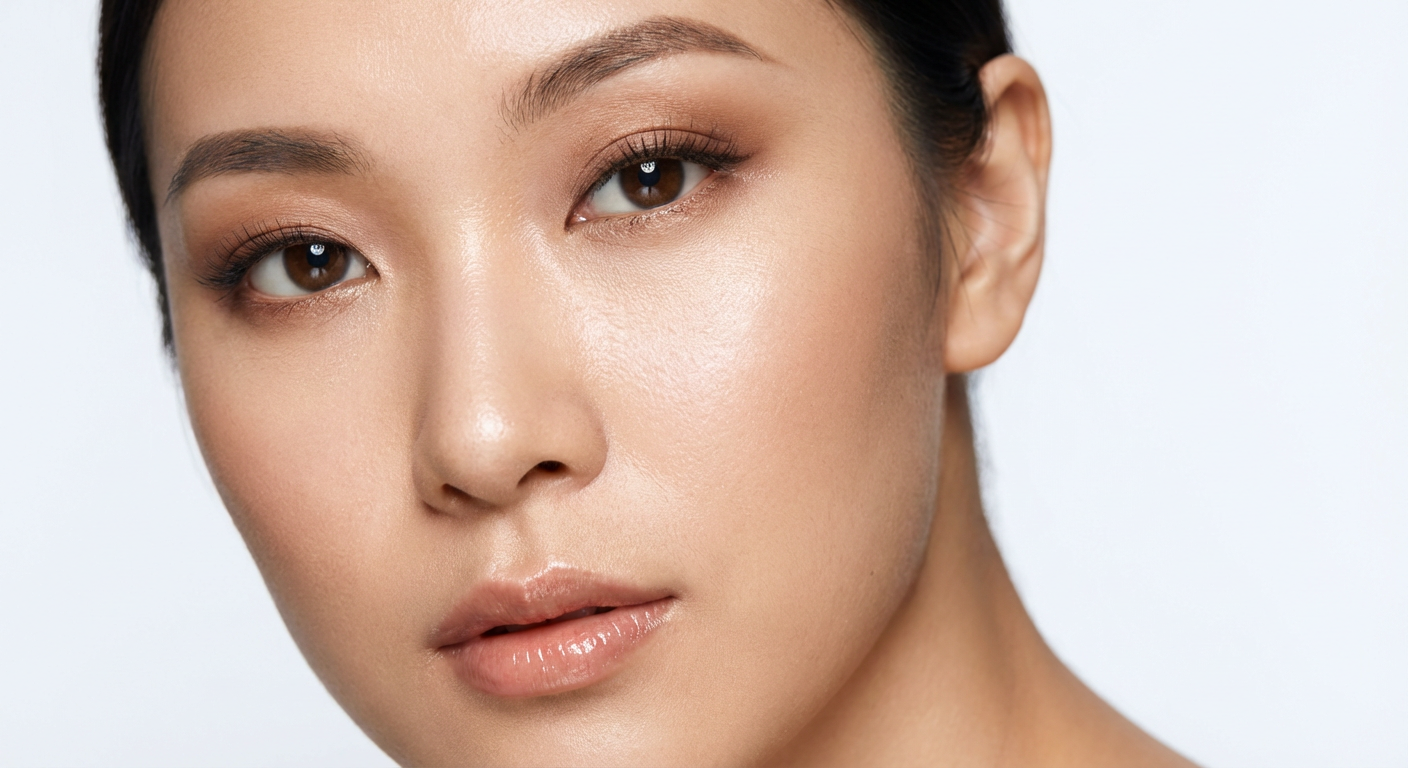
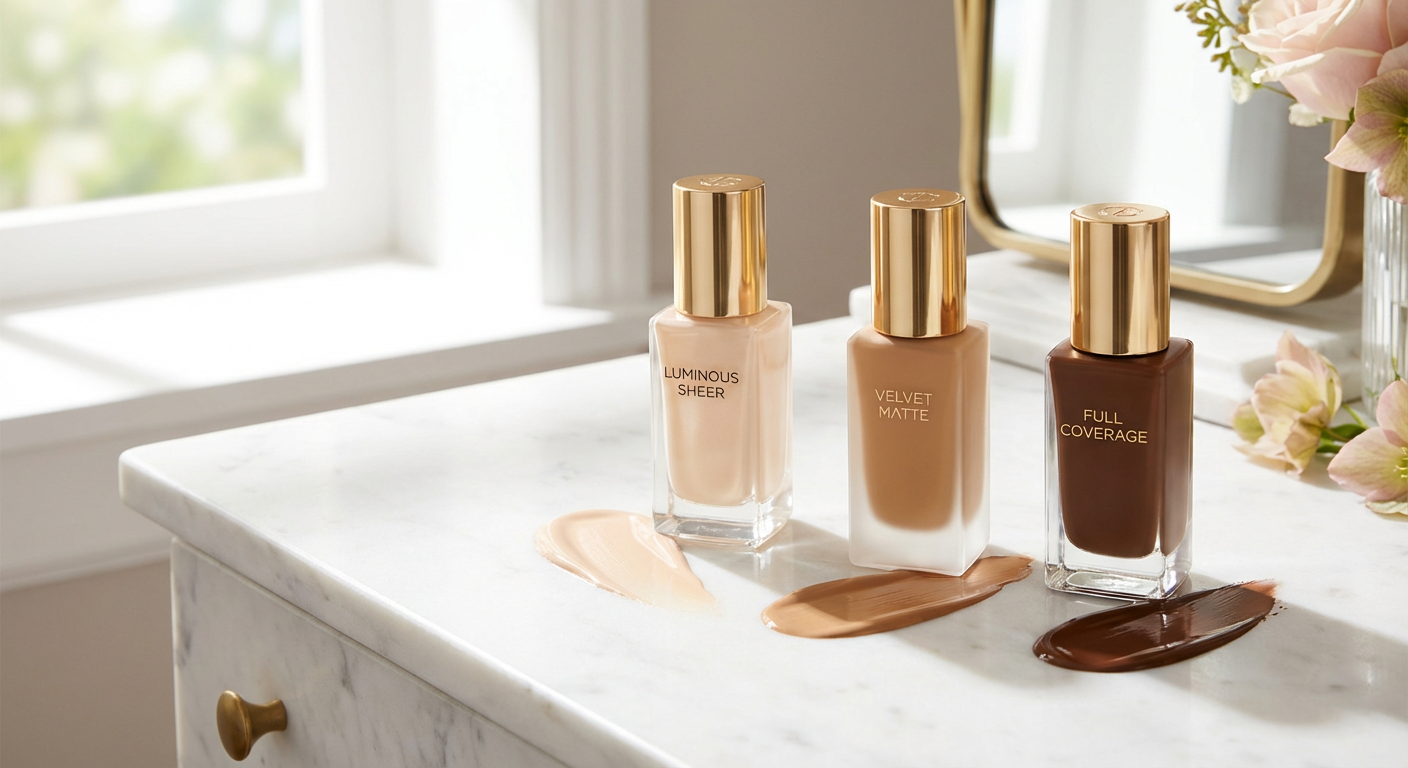
A client in Waterloo came to her wedding trial with foundation she’d been using for years. It looked fine in her bathroom mirror. Under natural light at our consultation, it was clearly orange against her neck.
She’d been wearing the wrong shade—and the wrong undertone—without realizing it. Her bathroom lighting had been lying to her.
After 10 years as a makeup artist in Kitchener, Waterloo, Cambridge, and Guelph, I’ve seen this constantly. Clients frustrated with foundation that oxidizes, cakes, separates, or just looks wrong. The formula is fine. The application is fine. They’re just using the wrong product for their skin.
Here’s how to actually find foundation that works.
Step 1: Identify Your Skin Type
Your skin type determines which formulas will work and which will fail within hours.
Oily Skin
How to identify it:
- Shine appears within a few hours of washing, especially on forehead, nose, and chin
- Pores are visible, particularly around nose
- Makeup tends to slide, separate, or disappear by afternoon
- Blotting papers pick up oil throughout the day
What works:
- Oil-free, matte, or satin finish formulas
- Long-wearing formulas designed for oil control
- Powder foundation (if you don’t have dry patches)
- Setting powder on T-zone
What doesn’t work:
- Dewy or luminous finishes (add shine you don’t want)
- Heavy cream foundations (slide off oily skin)
- Formulas with oils high in the ingredient list
A Cambridge client with oily skin had been using a dewy foundation because it was trendy. By noon, she looked like she hadn’t blotted in days. We switched to a matte long-wear formula and she finally had makeup that lasted through her workday.
Dry Skin
How to identify it:
- Skin feels tight after cleansing
- Flaky patches, especially around nose and mouth
- Foundation clings to dry spots and emphasizes texture
- Fine lines look more pronounced with powder
What works:
- Hydrating, dewy, or satin finish formulas
- Liquid or cream foundations
- Formulas with hyaluronic acid, glycerin, or oils
- Minimal powder (or none)
What doesn’t work:
- Matte formulas (emphasize dryness)
- Powder foundations (cling to flakes)
- Alcohol-based formulas (drying)
Combination Skin
How to identify it:
- Oily T-zone (forehead, nose, chin) but normal or dry cheeks
- Different products work on different areas
- Skin changes with seasons
What works:
- Satin finish formulas (not too matte, not too dewy)
- Buildable coverage
- Setting powder on T-zone only
- Two different primers (mattifying on T-zone, hydrating on cheeks)
Sensitive Skin
How to identify it:
- Reacts to products with redness, itching, or stinging
- Prone to redness, rosacea, or visible capillaries
- Breaks out from new products
What works:
- Fragrance-free, hypoallergenic formulas
- Mineral foundations (zinc oxide, titanium dioxide)
- Short ingredient lists
- Formulas for sensitive skin specifically
What doesn’t work:
- Fragranced products
- Formulas with alcohol, essential oils, or dyes
- Anything that stings when applied
Mature Skin
How to identify it:
- Fine lines and wrinkles visible
- Skin is thinner and more delicate
- Foundation settles into lines
- Dryness is common
What works:
- Hydrating, lightweight formulas
- Satin or luminous finishes (not matte)
- Buildable coverage (heavy formulas age you)
- Formulas with skincare ingredients
What doesn’t work:
- Matte formulas (emphasize lines)
- Heavy, full-coverage foundations (settle in creases)
- Powder over the whole face
Step 2: Find Your Undertone
Getting the shade depth right but the undertone wrong is why foundation looks off. You can be wearing the right “level” of light/medium/dark but still look orange, pink, or ashy.
The Three Undertones
Cool undertone:
- Veins on inner wrist look blue or purple
- Silver jewelry looks better than gold
- You burn easily in sun
- Pink or red hues in your skin
Warm undertone:
- Veins on inner wrist look green
- Gold jewelry looks better than silver
- You tan easily in sun
- Yellow or golden hues in your skin
Neutral undertone:
- Veins look blue-green (mix)
- Both silver and gold jewelry work
- Both warm and cool colors suit you
Testing Your Undertone
The jewelry test: Hold silver and gold jewelry against your face. Which looks more natural? Silver = cool, gold = warm, both = neutral.
The vein test: Look at your inner wrist in natural light. Blue/purple veins = cool, green veins = warm, mixed = neutral.
The white paper test: Hold white paper next to your face. If your skin looks pink against it, you’re cool. If it looks yellow, you’re warm. If it’s balanced, you’re neutral.
Why Undertone Matters
A Kitchener client kept buying foundations that looked perfect in the store but turned orange on her face within an hour. She had cool (pink) undertones but was choosing warm (yellow) foundations. Her skin’s natural pink was mixing with the yellow foundation, creating orange.
Once we matched her undertone correctly, the oxidation stopped.
Step 3: Test Correctly
How you test foundation matters as much as what you test.
Where to Test
Right: Your jawline, where face meets neck. This shows if the foundation matches both.
Wrong: Your hand, wrist, or cheek. Different skin tone than your face/neck junction.
How to Test
- Apply three shades that look close to your jawline (not blended, just stripes)
- Step into natural light (near a window or outside)
- The right shade virtually disappears against your skin
- Wait 10 minutes—some foundations oxidize (darken) after application
- Check again after oxidation time
Common Testing Mistakes
Testing in store lighting: Store lighting is designed to sell products, not show accurate color. Always check near a window or step outside.
Testing on your hand: Your hand is a different color than your face. Always test on your jawline.
Not waiting for oxidation: Some foundations darken 1-2 shades within 10 minutes. If you buy based on the initial color, you’ll be too dark once it settles.
Buying based on the bottle color: Foundation in the bottle doesn’t match foundation on skin. Always swatch.
Step 4: Choose Your Formula
Once you know your skin type and undertone, choose a formula that makes sense.
Liquid Foundation
Best for: All skin types, depending on formula
Most versatile format. Available in every finish (matte to dewy) and coverage level (sheer to full). Apply with fingers, brush, or sponge.
Cream Foundation
Best for: Dry, normal, mature skin
Richer texture with more coverage. Often contains skincare ingredients. Can feel heavy on oily skin.
Powder Foundation
Best for: Oily skin
Controls shine and sets itself. Not ideal for dry or mature skin (emphasizes texture). Good for touch-ups.
Stick Foundation
Best for: Touch-ups, targeted coverage
Convenient and portable. Can be heavy if applied all over. Works best for concealing specific areas.
Serum/Skin Tint Foundation
Best for: Minimal makeup days, good skin days
Very sheer coverage with skincare benefits. Won’t cover significant discoloration but creates beautiful natural skin.
Tinted Moisturizer/BB Cream
Best for: Natural look, everyday wear
Lightest coverage with added skincare. Good for those who want “something” without full foundation.
Step 5: Match Coverage to Occasion
The right coverage depends on what you’re doing.
Everyday: Sheer to light coverage. Your skin should look like skin, just evened out. Tinted moisturizer or light liquid.
Work: Light to medium coverage. Polished but not heavy. Buildable formulas work well.
Photos and events: Medium to full coverage. Flash photography washes out light coverage. Professional makeup helps.
Weddings: Full coverage that still looks natural. Long-wearing, waterproof, flash-friendly. Professional application recommended.
Common Foundation Problems (And How to Fix Them)
Oxidation (Foundation Turns Orange)
Why it happens: Your skin’s oils and pH interact with the foundation’s pigments, causing a color shift.
Solutions:
- Use a silicone-based primer (creates barrier between skin and foundation)
- Try a different formula (some oxidize more than others)
- Choose a shade slightly lighter than your match (it will darken)
- Set with powder immediately after application
Cakey Foundation
Why it happens: Too much product, wrong formula for your skin, or dry patches underneath.
Solutions:
- Use less product (you can always add more)
- Exfoliate regularly to remove dead skin
- Moisturize and prime before application
- Apply with a damp sponge (sheers out product)
- Try a lighter formula
Foundation Settling Into Lines
Why it happens: Foundation migrates into creases as your face moves and skin produces oil.
Solutions:
- Use hydrating products underneath
- Apply very thin layers
- Skip powder in areas with lines
- Use a sponge instead of brush (presses product into skin)
- Try a lighter coverage formula
Foundation Doesn’t Last
Why it happens: Wrong formula for your skin type, no primer, no setting products.
Solutions:
- Match formula to skin type (oily skin needs oil-free)
- Use primer appropriate for your skin
- Set with powder (oily areas) and/or setting spray
- Use long-wear formulas designed to last
Foundation Looks Wrong in Photos
Why it happens: SPF causes flashback (white cast), wrong undertone shows under flash, or coverage is too light.
Solutions:
- Avoid high-SPF foundations for photography
- Ensure undertone is correct (flash reveals mismatches)
- Use enough coverage (sheer looks washed out in photos)
- Test with flash photography before your event
Waterloo Region Climate Considerations
Our local climate affects foundation performance.
Winter (November-March)
Challenges: Cold outdoor air combined with indoor heating creates very dry conditions. Skin gets dehydrated, foundation emphasizes flakiness.
Adjustments:
- Switch to more hydrating formulas
- Avoid matte finishes
- Use richer moisturizer underneath
- Skip powder or use minimally
Summer (June-August)
Challenges: Humidity increases oil production. Foundation slides, separates, or disappears faster.
Adjustments:
- Switch to oil-control formulas
- Use mattifying primer
- Set with powder
- Carry blotting papers
Spring/Fall
Challenges: Fluctuating weather means skin changes week to week.
Adjustments:
- Have both hydrating and oil-control options
- Adjust based on current conditions
- May need different products for different days
Professional Foundation Application
For special occasions—weddings, professional photos, important events—professional application makes a difference.
What a makeup artist does differently:
- Tests multiple shades in proper lighting
- Blends custom shades if needed
- Uses professional-grade products designed for photography and longevity
- Applies with techniques that create flawless finish
- Knows which products work together
When I do bridal makeup in Kitchener, Waterloo, Cambridge, or Guelph, foundation matching is the first thing we perfect at the trial. We test in natural light, check for oxidation, and photograph with flash. By wedding day, there are no surprises.
Mobile Makeup Services in Waterloo Region
I offer professional makeup services throughout Kitchener, Waterloo, Cambridge, and Guelph, including foundation matching consultations.
What I provide:
- Professional color matching in natural light
- Skin type assessment
- Product recommendations for your specific needs
- Full makeup application for events
- Bridal makeup with trial included
Why foundation matters for your event:
At a recent Cambridge wedding, the bride had a visible foundation line in her engagement photos (done by a friend). For her wedding, we spent extra time at her trial matching precisely. Her wedding photos show seamless, natural skin.
Quick Reference: Foundation by Skin Type
| Skin Type | Best Finish | Best Formula | Avoid |
|---|---|---|---|
| Oily | Matte, satin | Oil-free liquid, powder | Dewy, cream |
| Dry | Dewy, satin | Hydrating liquid, cream | Matte, powder |
| Combination | Satin | Balanced liquid | Extremes (very matte or very dewy) |
| Sensitive | Any | Mineral, fragrance-free | Fragranced, alcohol-based |
| Mature | Satin, luminous | Lightweight liquid | Matte, heavy full-coverage |
Frequently Asked Questions About Choosing Foundation
How do I know if my foundation undertone is wrong?
If your foundation looks orange, pink, or ashy against your neck, the undertone is wrong. Orange usually means you’re cool-toned wearing warm foundation. Pink or ashy usually means you’re warm-toned wearing cool foundation. Test foundation on your jawline in natural light and check that it blends seamlessly with your neck.
Why does my foundation oxidize and turn orange?
Oxidation happens when your skin’s oils and pH react with foundation pigments, causing a color shift over several hours. Solutions: use a silicone primer to create a barrier, try a different formula (some oxidize more than others), choose a slightly lighter shade, or set immediately with powder.
Should I match foundation to my face or my neck?
Match to your neck, and test on your jawline. Your face and neck are in every photo together—mismatched color is obvious. The right foundation should disappear into your jawline and blend seamlessly with your neck.
How do I choose foundation coverage?
Match coverage to occasion. Everyday: sheer to light. Work: light to medium. Photos and events: medium to full. Heavy coverage for daily wear looks unnatural; sheer coverage for photography gets washed out. Buildable formulas let you adjust for different situations.
What’s the difference between matte and dewy foundation?
Matte foundation has no shine and a flat, powdery finish—best for oily skin and controlling shine. Dewy foundation has a luminous, glowing finish—best for dry and mature skin. Satin finish is in between and works for most skin types.
Why does my foundation look cakey?
Cakiness comes from too much product, wrong formula for your skin type, or textured skin underneath. Solutions: use less product, exfoliate regularly, moisturize well before application, apply with a damp sponge, and try a lighter formula.
How often should I replace my foundation?
Liquid foundation typically lasts 6-12 months after opening. Signs it’s expired: changed smell, separated texture, irritates your skin, or doesn’t apply smoothly. Powder foundation lasts longer (up to 2 years) but should still be replaced if texture or performance changes.
Can I mix two foundation shades?
Yes—this is what professional makeup artists do. If you’re between shades or your skin tone changes seasonally, mixing creates a custom match. You can also mix formulas (adding a drop of liquid to cream, for example) to adjust coverage or finish.
Mobile makeup services throughout Waterloo Region
Serving: Kitchener | Waterloo | Cambridge | Guelph | Elmira | Baden | 50km radius
Contact: (226) 210-4099
Book Online: Schedule Your Makeup Consultation